
If you have spent any time researching Silver Labs, you have probably come across strong opinions on both sides — traditional Lab breeders who insist Silver Labs are not genuine Labradors, and Silver Lab enthusiasts who dismiss the controversy entirely. The honest answer sits somewhere in between, and understanding it properly helps you make an informed decision rather than a reactive one.
This guide covers why some buyers avoid Silver Labs — the actual reasons, not the rumor — and what those reasons genuinely mean for a family considering a Silver Lab as a companion. We sell Silver Lab puppies at Labrador Today and we think buyers deserve a completely honest picture before deciding.
- What Is a Silver Lab?
- Why Some Buyers Avoid Silver Labs – The Real Reasons
- The Purebred Status Debate – What the Evidence Actually Shows
- AKC Registration – What It Does and Does Not Mean for Silver Labs
- Color Dilution Alopecia – What Silver Lab Buyers Should Know
- Silver Lab Temperament – Does the Controversy Affect Behavior?
- Who Should and Should Not Buy a Silver Lab
- What to Ask a Silver Lab Breeder Before Buying
- Our Silver Lab Puppies
- Frequently Asked Questions
What Is a Silver Lab?
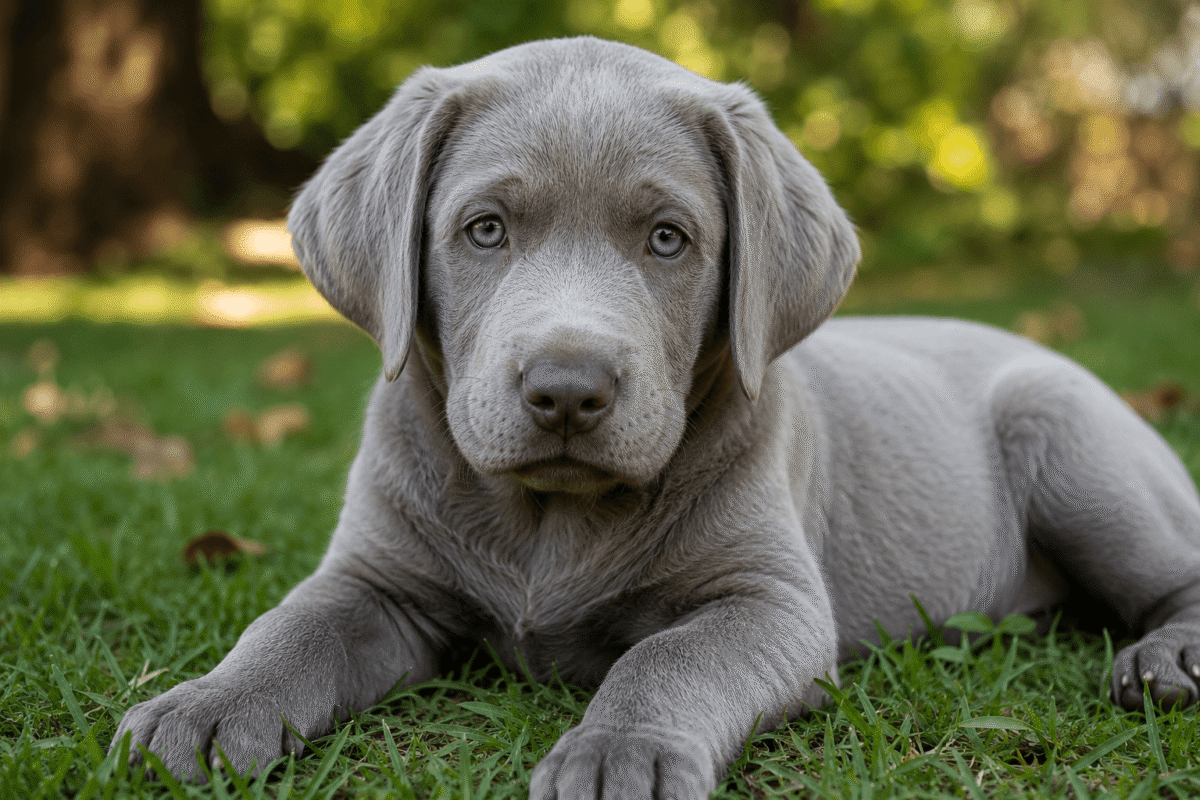
A Silver Labrador Retriever is a Chocolate Lab carrying two copies of the recessive dilution gene — the d allele at the MLPH gene locus. Two copies of this gene (genotype dd) dilute the chocolate pigment to a silver-grey coat. The same dilution gene produces charcoal in Black Labs (dilute black) and champagne in Yellow Labs (dilute yellow).
| Base Color | With Dilution Gene (dd) | Common Name |
|---|---|---|
| Chocolate (bb) | Diluted chocolate → silver-grey coat | Silver Lab |
| Black (BB or Bb) | Diluted black → dark grey coat | Charcoal Lab |
| Yellow (ee) | Diluted yellow → pale cream-gold coat | Champagne Lab |
Silver Labs are AKC-registered as Chocolate Labrador Retrievers. The dilute coat is noted in their registration but they are recorded under the Chocolate color classification — not as a separate color or breed.
Why Some Buyers Avoid Silver Labs – The Real Reasons
There are four distinct reasons buyers or breeders avoid Silver Labs. It is worth separating them clearly because they are not all equally valid:
| Reason | How Valid Is It? | What It Actually Means |
|---|---|---|
| The purebred status debate | Genuinely contested — not settled | Some breeders and geneticists question whether the dilute gene entered Labrador bloodlines through Weimaraner crossbreeding in the mid-20th century rather than through natural Lab genetics. The AKC registers Silver Labs but the Lab breed clubs have not formally recognized the color. This debate has not been conclusively resolved |
| AKC breed standard exclusion | Factually accurate — but limited in practical impact | The AKC Labrador Retriever breed standard recognizes only Black, Yellow, and Chocolate. Silver is not a recognized color under the standard — meaning Silver Labs cannot compete in conformation shows. They can compete in AKC performance events. For a family companion this distinction is largely irrelevant |
| Color Dilution Alopecia (CDA) risk | Real but uncommon — severity varies | The dilute gene in some breeds is associated with Color Dilution Alopecia — a skin condition causing dry, flaky skin, hair thinning, and coat problems. CDA is documented in Weimaraners and some other dilute-coated breeds. Its prevalence in Silver Labs specifically is not well-documented — some Silver Labs develop mild skin issues, many do not. It is a real consideration but not a guaranteed outcome |
| Traditional breeder opposition | Real — but reflects breeding community politics more than objective health data | Many established Labrador breeders refuse to breed or endorse Silver Labs as a matter of breed preservation principle. Some breed clubs prohibit member breeders from producing dilute-colored Labs. This opposition is genuine and longstanding — but it does not in itself mean Silver Labs are unhealthy or unsuitable as family companions |
The Purebred Status Debate – What the Evidence Actually Shows
This is the core of the Silver Lab controversy and it deserves a careful explanation rather than a dismissal in either direction:
| Position | The Argument | The Evidence |
|---|---|---|
| Silver Labs are not purebred Labradors | The dilute gene does not appear in historical Labrador bloodlines. Silver Labs appeared suddenly in US breeding records in the 1950s-1960s, coinciding with Weimaraner popularity. The Weimaraner carries the same dilute gene. The most plausible explanation is Weimaraner crossbreeding that was not disclosed | There are no documented Silver Labs in early 20th century Labrador records. The timing of their appearance correlates with Weimaraner introduction. However, this remains historical inference rather than proven genetic fact |
| Silver Labs are purebred Labradors with a naturally occurring dilute gene | The dilute gene exists across many dog breeds and could have occurred naturally in the Lab gene pool through mutation. The AKC accepts Silver Labs as Chocolate Labradors. Many Silver Labs test as 100% Labrador Retriever on DNA breed composition tests | Consumer DNA tests showing 100% Lab are not definitive proof — these tests may not have sufficient resolution to detect small percentages of Weimaraner ancestry from crosses several generations back. The AKC’s acceptance is administrative, not a genetic ruling |
The honest position: this debate has not been conclusively resolved by genetic science. The origin of the dilute gene in Labrador lines remains genuinely uncertain. Buyers should understand this rather than receive a confident answer in either direction.
AKC Registration – What It Does and Does Not Mean for Silver Labs
| AKC Registration Factor | What It Means for Silver Labs |
|---|---|
| Registration status | Silver Labs are AKC-registered as Chocolate Labrador Retrievers with the dilute color noted — they receive full AKC registration with both limited and full registration available |
| Conformation showing | Silver Labs cannot compete in AKC conformation shows — the breed standard does not recognize the silver color. This is the primary practical consequence of their non-standard status |
| Performance events | Silver Labs can compete in all AKC performance events — obedience, rally, agility, hunt tests, field trials — their registration is fully valid for these purposes |
| Breeding registration | Full AKC registration is available for Silver Labs — offspring can be registered. Limited registration is also available for pet-quality placements |
| What registration does not prove | AKC registration does not confirm that the dilute gene is original to Labrador genetics — it confirms only that the registered parents were recorded as purebred Labradors. The registration question and the genetic origin question are separate |
Color Dilution Alopecia – What Silver Lab Buyers Should Know
Color Dilution Alopecia is the most legitimate health concern associated with dilute-coated dogs. Here is an honest assessment for Silver Lab buyers:
| CDA Factor | What the Evidence Shows |
|---|---|
| What CDA is | A skin condition associated with the dilute gene in some breeds — causes dry, scaly skin, hair thinning, and coat fragility. Not painful in most cases but chronic and not curable |
| Which breeds are affected | Well-documented in Weimaraners, Dobermans, and some other dilute-coated breeds. Documented cases exist in Silver Labs but the prevalence rate in Labs specifically is not well-established in peer-reviewed literature |
| How common is it in Silver Labs | Anecdotally variable — some Silver Lab breeders report very low rates in their lines, others report occasional mild cases. There is no large-scale study specifically on CDA prevalence in Silver Labs at this time |
| How severe is it when it occurs | Range from mild dry skin requiring management to more significant coat thinning. Most documented cases in Labs are on the mild end. Severe CDA of the kind seen in some Weimaraners appears less common in Silver Labs |
| Can you screen for it | No reliable genetic test for CDA risk exists at this time — it cannot be screened out of a litter before birth. Ask breeders about CDA history in their specific lines |
| Bottom line for buyers | CDA is a real consideration — not a reason to dismiss Silver Labs entirely, but worth asking any Silver Lab breeder about skin and coat history in their lines specifically |
Silver Lab Temperament – Does the Controversy Affect Behavior?
No. Whatever one concludes about the origin of the dilute gene, Silver Labs display the same fundamental Labrador temperament as any other color:
| Temperament Factor | Silver Lab Reality |
|---|---|
| Family suitability | Silver Labs are loyal, patient, affectionate, and people-oriented — the same core temperament profile as all Labrador Retrievers. The coat color does not alter these characteristics |
| Trainability | Equally trainable — food motivated and eager to please from 8 weeks. No meaningful difference in trainability between Silver Labs and other colors from equivalent breeding lines |
| Energy level | Silver Labs are registered as Chocolate Labs and tend to share the energetic, playful character commonly described in Chocolate Lab lines — particularly from working or companion lines |
| With children | Excellent — same patient, gentle temperament that makes all Labs reliable family dogs. Coat color does not affect behavior with children |
Who Should and Should Not Buy a Silver Lab
| A Silver Lab Is a Good Choice If… | A Silver Lab May Not Be Right If… |
|---|---|
| You want a striking, distinctive-looking Lab companion and the registration debate does not concern you | You plan to compete in AKC conformation shows — Silver Labs are not eligible |
| You are buying a family companion, not a show or breeding dog | You are deeply invested in strict Labrador breed purity and the dilute gene origin question is important to you personally |
| You have found a Silver Lab breeder with documented health testing and a transparent history of coat and skin health in their lines | You cannot get a clear answer from a breeder about CDA history in their specific lines |
| You want an AKC-registered Lab with the same personality as any other well-bred Labrador | You specifically need full breed standard recognition for breeding program purposes |
What to Ask a Silver Lab Breeder Before Buying
| Question | What a Responsible Answer Looks Like |
|---|---|
| Are the parents AKC-registered? | Yes — registered as Chocolate Labrador Retrievers with the dilute color noted. Papers available to view |
| Have both parents had OFA hip and elbow evaluations? | Yes — certificates available or verifiable at ofa.org |
| Have you seen any skin or coat issues in your Silver Lab lines? | Honest answer — whether they have had cases, how mild or severe, and what they do when it occurs |
| What is the history of your Silver Lab breeding program? | Clear answer about how long they have bred Silver Labs and what health outcomes they track |
| What registration will my puppy receive? | Full or limited AKC registration as a Chocolate Labrador Retriever — with papers in hand at or before the time of purchase |
Our Silver Lab Puppies
At Labrador Today, our Silver Lab puppies are AKC-registered as Chocolate Labrador Retrievers, raised in a family home environment, and sold with full health documentation — including OFA clearances on both parent dogs. We present the controversy around Silver Labs honestly rather than dismissing it, because we believe buyers who understand the full picture make better decisions for their households.
Browse our currently available Silver Lab puppies: Silver Lab Puppies for Sale
For further reading on Lab colors, coat genetics, and temperament:
- Which Color Lab Is the Calmest?
- How to Tell if a Labrador Puppy Is Purebred
- English Lab vs American Lab
- Average Cost of a Labrador Puppy
👉 Browse All Available Puppies
👉 Contact Us With Any Questions About Silver Labs
Frequently Asked Questions
Why do some people say Silver Labs are not real Labradors?
The concern is that the dilute gene responsible for the silver coat may have entered Labrador bloodlines through Weimaraner crossbreeding in the mid-20th century rather than occurring naturally within the breed. Silver Labs appeared in US breeding records in the 1950s-60s — coinciding with Weimaraner popularity — and the timing raises questions that have not been conclusively answered. The AKC registers Silver Labs as Chocolate Labradors, but the breed standard does not recognize the silver color. This debate remains genuinely unsettled.
Are Silver Labs AKC registered?
Yes — Silver Labs are AKC-registered as Chocolate Labrador Retrievers with the dilute coat color noted. They cannot compete in AKC conformation shows but can compete in all AKC performance events including obedience, agility, hunt tests, and field trials.
Do Silver Labs have more health problems than other Labs?
Silver Labs share the same breed-wide health concerns as all Labrador Retrievers — hip dysplasia, elbow dysplasia, eye conditions, and obesity risk. The additional consideration specific to Silver Labs is Color Dilution Alopecia — a skin and coat condition associated with the dilute gene. Its prevalence in Silver Labs is not well-documented in peer-reviewed literature, but it is a real possibility worth discussing with any Silver Lab breeder before purchasing.
What is the dilute gene in Silver Labs?
The dilute gene is a recessive allele at the MLPH gene locus — designated as the d allele. Two copies of this gene (genotype dd) dilute the base coat color. In a Chocolate Lab, dd produces silver-grey. In a Black Lab, dd produces charcoal. In a Yellow Lab, dd produces champagne. The dilute gene itself is well-understood genetically — the debate is about how it entered the Labrador gene pool, not about whether it exists.
Are Silver Labs good family dogs?
Yes — Silver Labs display the same fundamental Labrador temperament as any other color. Patient with children, loyal, trainable, and people-oriented. The controversy surrounding their origin does not affect their suitability as family companions. The coat color debate is a breeding community and registration issue, not a behavioral one.
Why are Silver Labs more expensive than other Labs?
Silver Labs command a price premium because buyer demand for their striking appearance exceeds the supply of puppies produced by dedicated Silver Lab breeding programs. Their rarity relative to Black, Yellow, and Chocolate Labs — combined with the additional controversy that makes some breeders unwilling to produce them — creates a supply constraint that supports higher prices. Read our full guide on the average cost of a Labrador puppy for a full breakdown.
Can Silver Labs compete in AKC events?
Yes — with one exception. Silver Labs cannot compete in AKC conformation shows because the silver color is not recognized in the Labrador Retriever breed standard. They can compete in all AKC performance and companion events — obedience trials, rally, agility, hunt tests, field trials, and tracking. Their registration is fully valid for all non-conformation purposes.
